
Prairie cemeteries are treasured sites where family stories and community histories come alive through gravestones and symbols. By exploring these cemeteries, you uncover personal connections, cultural traditions, and local heritage woven into each marker. Headstones reveal social status, religious beliefs, and evolving customs that define a community over generations. If you look closely, you’ll discover more about the people who shaped the prairie’s history and how their legacies continue to resonate today.
Key Takeaways
- Prairie cemeteries serve as tangible links to family histories and local heritage through engraved headstones and memorials.
- Headstone inscriptions and symbols reveal family stories, cultural backgrounds, and religious beliefs across generations.
- Clusters of family graves illustrate lineage, continuity, and shared community identity over time.
- Personal belongings or unique carvings on stones often tell individual family narratives and values.
- Cemetery visits and memorial rituals reinforce family bonds and preserve collective memory within the community.
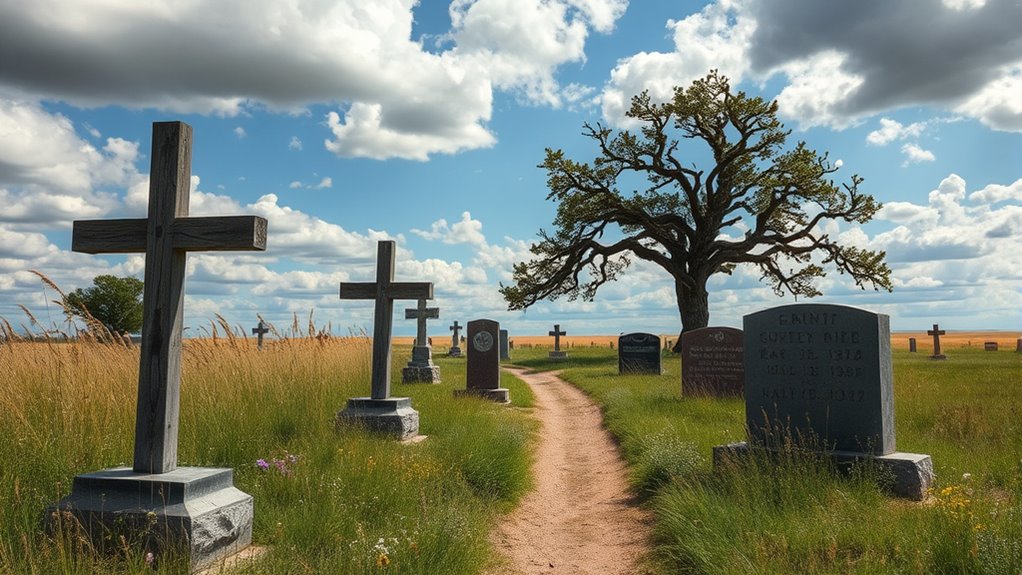
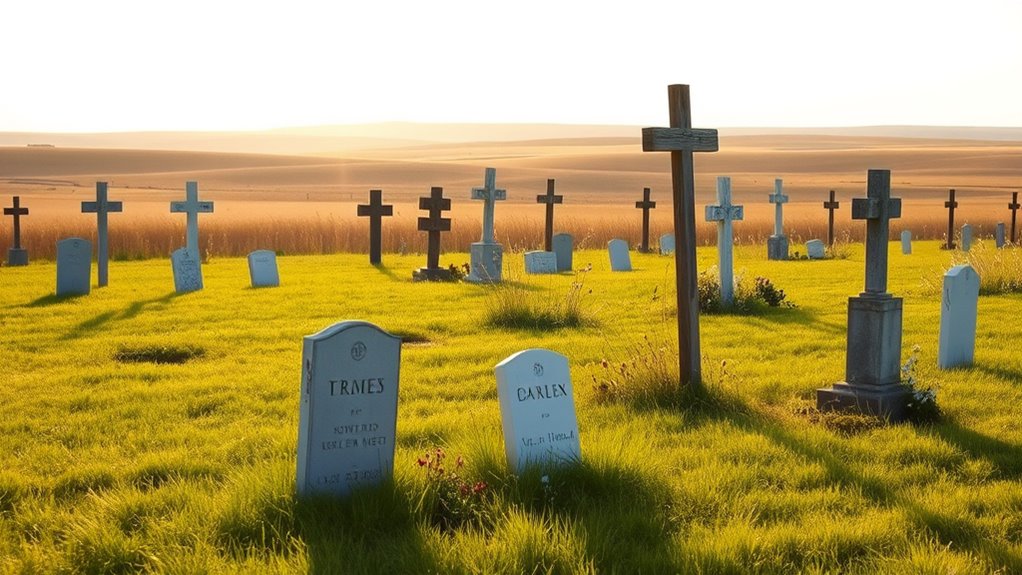
Have you ever wondered what stories lie beneath the quiet rows of prairie cemeteries? These peaceful spaces are more than just final resting places; they’re repositories of history, culture, and family narratives waiting to be uncovered. As you walk among these gravestones, you notice the historic headstones that mark each plot—each one tells a story through its craftsmanship, inscriptions, and symbols. Many of these headstones are weathered but still carry intricate carvings or epitaphs that reveal the values, beliefs, and social status of those buried beneath. The style and material of these stones often indicate the era in which they were placed, providing clues about the community’s history and the local craftsmanship. It’s like reading a silent history book, one stone at a time.
Delving into burial customs gives you further insight into the lives of prairie residents. Different communities had their unique ways of honoring the dead, often reflecting their cultural backgrounds and religious beliefs. For example, some families might have buried loved ones with personal belongings or symbols that held meaning—like a cross, a star, or even items from daily life. These customs weren’t just about respect; they served as a visual language, communicating identity, faith, and hopes for the afterlife. Over time, you’ll notice variations in headstone shapes, sizes, and engravings, revealing the evolution of burial practices through decades or even generations. Some graves might feature simple stones, while others boast elaborate monuments, illustrating a family’s social standing or their desire to commemorate loved ones grandly. Recognizing these differences can help you understand the burial customs and social dynamics of prairie communities.
Walking through prairie cemeteries, you start to see how these customs tie into larger community stories. Families often gathered here for reunions, memorials, or special days, reinforcing bonds and preserving traditions. You might find clusters of graves belonging to the same family, each with markers that span different eras, showing how customs changed or remained steadfast over time. These practices, carved into stone or expressed through ritual, reflect resilience and adaptation amid the challenges of frontier life. As you explore, you realize that each headstone, each burial custom, adds a piece to the puzzle of prairie history—stories of survival, hope, loss, and legacy that continue to resonate today.

Stone Carving Tools, 11 Pcs Stone Seal Craft Engraving Wood Carving Tools Gravers/Chisels/Knife Set with Bag
- Material: High-quality manganese steel for durability
- Design: Double-edged, weighty, fine-headed chisel
- Set Includes: 11-piece stone carving tool set
As an affiliate, we earn on qualifying purchases.
As an affiliate, we earn on qualifying purchases.
Frequently Asked Questions
How Can I Find Records of Unmarked Graves in Prairie Cemeteries?
To find records of unmarked graves in prairie cemeteries, you should start with cemetery surveys, which often document unmarked graves and burial patterns. Visit local historical societies or county records offices, as they may hold detailed surveys or maps. Speaking with cemetery caretakers or local residents can also provide valuable information. Additionally, consider using ground-penetrating radar technology for in-depth searches of unmarked graves.
What Are the Best Methods to Preserve Old Headstones?
Think of old headstones as fragile time capsules needing careful tending. You can preserve them through gentle cleaning with non-abrasive tools, avoiding harsh chemicals that could damage the stone. Applying stone preservation techniques helps protect the surface from weathering. Document their condition meticulously to maintain historical records. This way, you breathe new life into history’s silent storytellers, ensuring their legacy endures for future generations to cherish and study.
How Do I Trace Family Histories Through Cemetery Records?
You can trace your family histories through cemetery records by starting with genealogical research, examining headstone inscriptions, and collecting essential details like birth and death dates. Visit local archives or online databases to access historical documentation. Interview relatives for stories and additional information. Combining these methods helps you build an accurate family tree, uncover ancestors’ lives, and preserve your heritage through detailed historical documentation.
Are There Specific Etiquette Rules for Visiting Prairie Cemeteries?
Sure, when visiting prairie cemeteries, you should always prioritize respectful behavior—think of it as tiptoeing through history. Keep noise to a minimum, avoid wandering off marked paths, and don’t forget photography etiquette; flash might be your friend, but the spirits prefer natural light. Show reverence for the site and its visitors, living or otherwise. After all, respecting these hallowed grounds keeps their stories alive for generations.
Can I Access Prairie Cemetery Records Online?
Yes, you can access prairie cemetery records online. Many digital archives and genealogy websites host these records, making it easier for you to research family histories from the comfort of your home. You simply need to search by cemetery name or location. Keep in mind that some records might be limited or require a subscription, but overall, online access is a convenient way to explore prairie cemetery records.
Conclusion
As you leave the quiet prairie cemetery, you can’t shake the feeling that these stones hold secrets waiting to be uncovered. Each name whispers stories of lives long gone, yet somehow still present. Who else has walked here, their stories lost in time? The wind seems to carry their voices, urging you to dig deeper. Suddenly, a faint inscription catches your eye—what untold family secret will you uncover next? The past awaits, just beneath the surface.