
Ice harvesting on northern lakes is a historic practice, blending tradition with practicality during winter. You assess the ice carefully for thickness and safety, using tools like saws and chisels to cut manageable sections. Once harvested, the ice is stored in insulated sheds to last months, supporting food preservation and local economies. As you explore further, you’ll discover essential safety tips and the deep cultural significance behind this age-old activity.
Key Takeaways
- Confirm the ice is thick, solid, and safe by checking local reports and testing with an auger or chisel.
- Use traditional tools like hand saws, chisels, and ice picks for harvesting, prioritizing patience and accuracy.
- Harvest ice early in the morning when it is typically thickest and safest for cutting.
- Transport ice to insulated storage with sawdust or straw to prevent melting and preserve it for months.
- Follow safety precautions by carrying rescue gear, working with experienced harvesters, and avoiding harvesting alone.
During the cold winter months on northern lakes, ice harvesting becomes an essential activity that combines tradition with practical necessity. For generations, communities have relied on this practice to store ice for the warmer months, keeping food fresh and supporting local economies. As you participate in or observe ice harvesting, you’ll quickly notice how deeply rooted it is in winter traditions. It’s more than just a method of gathering ice; it’s a cultural ritual that reconnects people with nature and seasonal rhythms. However, before you step onto the frozen surface, prioritizing ice safety is paramount. Thick, solid ice is key to a safe harvest, and knowing how to assess ice conditions can prevent accidents. Checking local reports, observing the ice’s appearance, and testing thickness with an auger or chisel are essential steps you shouldn’t overlook. Remember, ice isn’t uniformly thick; it varies depending on water currents, wind, and snow cover, so always proceed with caution. Understanding ice properties can help you better evaluate safety and prevent hazards.
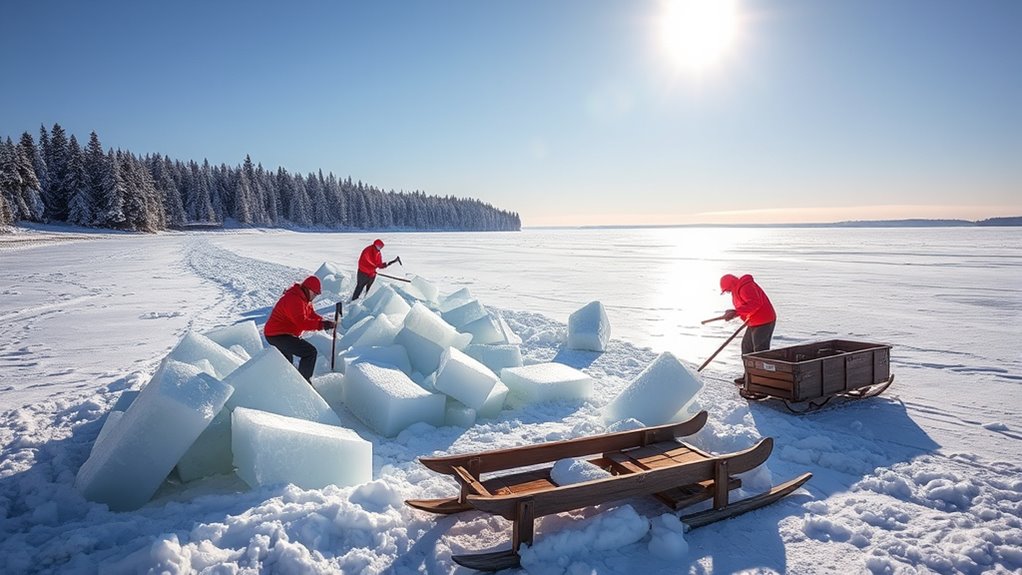
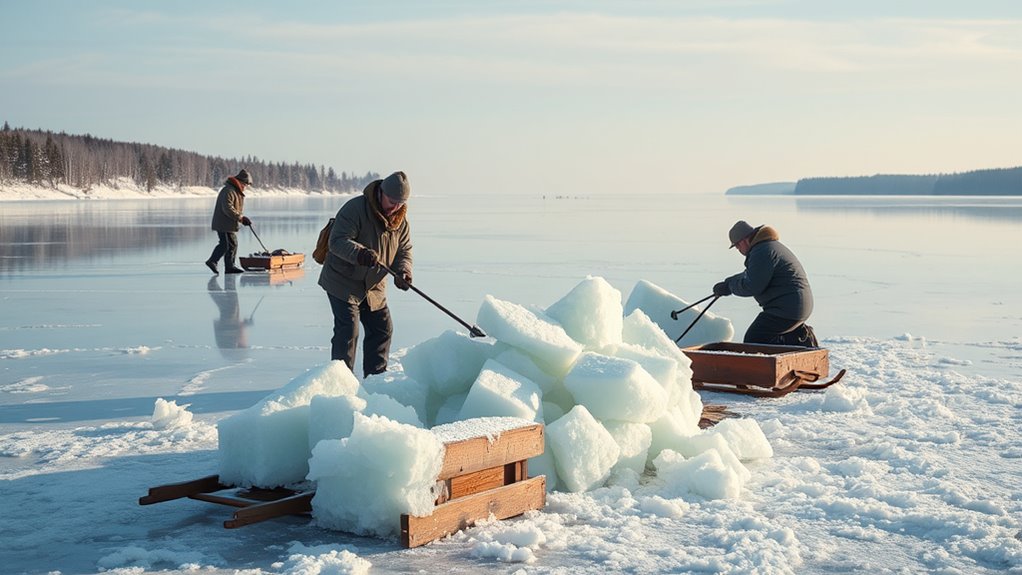
Once you’re confident in the ice’s safety, the process of harvesting begins. Traditional tools like hand saws, chisels, and ice picks are used to cut and lift large blocks of ice from the surface. You’ll find that patience and precision are critical. Workers often work early in the morning when the ice is at its thickest, and they break the ice into manageable sections for transport. As you handle these tools, you become part of a time-honored routine that’s persisted long before modern refrigeration. The harvested ice is then transported to ice houses or storage sheds, where it’s insulated with sawdust or straw to prevent melting. This preserved ice can last for months, providing a crucial resource during months when lakes are frozen solid.
Throughout this process, respecting ice safety guidelines is essential. It’s easy to get complacent once you see the thick layer beneath your feet, but conditions can change unexpectedly. Melting from below or cracks from shifting temperatures can compromise ice integrity. Always carry safety gear such as ice picks, ropes, and a flotation device, and never harvest alone. If you’re new to ice harvesting, it’s best to work with experienced practitioners who understand the nuances of ice safety and can guide you through the proper techniques. Engaging in this winter tradition safely ensures you preserve this historic activity while protecting yourself and others. By respecting the power and unpredictability of frozen water, you contribute to the ongoing legacy of ice harvesting on northern lakes.

BarConic® Japanese Ice Saw
- Wooden handle for comfortable grip: Wooden handle with sharp metal blades
- Precise ice cutting: Ideal for carving large ice blocks
- Efficient cutting teeth: Alternating teeth for low-effort cuts
As an affiliate, we earn on qualifying purchases.
As an affiliate, we earn on qualifying purchases.
Frequently Asked Questions
How Has Climate Change Affected Ice Harvesting Seasons?
Climate variability and seasonal shifts have shortened ice harvesting seasons markedly. You might notice that colder temperatures arrive later in the year and warm up sooner, making it harder to plan and harvest ice. This unpredictability reduces the window for harvesting, forcing you to adapt quickly. As the climate continues to change, you’ll likely face even more challenges in maintaining traditional ice harvesting practices, impacting communities that rely on this resource.
What Safety Measures Are Essential During Ice Harvesting?
You should prioritize safety by wearing protective gear like insulated gloves, helmets, and sturdy boots to safeguard against slips and falls. Always stay aware of ice thickness and avoid areas with cracks or flowing water. Keep emergency preparedness kits nearby, and never work alone—having a buddy ensures help is close if needed. These precautions help you enjoy ice harvesting safely, even as conditions change.
Are There Legal Restrictions on Ice Harvesting in Certain Regions?
Yes, you need to follow regional regulations and licensing requirements when ice harvesting. These laws vary by region, so it’s essential to verify local authorities‘ guidelines before you start. Failing to comply can lead to fines or legal trouble. Always ensure you have the proper permits and adhere to safety standards mandated by regional agencies to stay within the law and promote safe harvesting practices.
How Is Harvested Ice Stored and Preserved for Later Use?
You store harvested ice in well-insulated storage facilities, like insulated ice houses or refrigerated warehouses, to safeguard its quality. For example, a historic case involved farmers using thick straw insulation around ice blocks to keep them frozen through summer. Using effective insulation techniques prevents melting, while proper storage facilities ensure the ice remains intact for later use, whether for cooling or other purposes. This approach keeps your ice fresh and usable for months.
What Are the Environmental Impacts of Commercial Ice Harvesting?
You should know that commercial ice harvesting can disrupt wildlife habitats and affect water quality. The process often disturbs aquatic life, harming fish and other species. Additionally, removing large amounts of ice can alter water temperatures and flow, leading to poor water quality. These environmental impacts highlight the need for sustainable practices to protect ecosystems while harvesting ice, ensuring minimal disruption and maintaining healthy water systems.
Conclusion
As you imagine the frozen lakes, think of them like giant freezers waiting to be opened. Ice harvesting on northern lakes was a essential tradition, shaping communities and economies. Just like the winter cold preserves nature’s bounty, this practice kept food fresh and industries thriving. Though times have changed, remembering this icy craft is like holding onto a piece of history—frozen in time, waiting to be rediscovered by those curious enough to explore.