
Farm auctions and estate sales follow cherished traditions that build trust and encourage participation. You’ll see lively, rhythmic calls from auctioneers, preview days for inspection, and a diverse mix of items like equipment, livestock, or antiques. These customs promote transparency, fairness, and community involvement, making sales more successful. By understanding and respecting these practices, you’ll set yourself up for a smooth, profitable sale—keep exploring to learn how to get the most out of your next event.
Key Takeaways
- Traditional farm auctions and estate sales emphasize transparency, community participation, and fair pricing to build trust among buyers.
- Auctioneers’ lively calls and preview days enhance bidding excitement and allow informed inspection of assets.
- Estate sales typically occur quickly over a weekend, featuring diverse items like furniture, jewelry, and tools.
- Proper asset organization and valuation are crucial for estate sales to attract appropriate buyers and maximize proceeds.
- Respecting local customs and customs enhances credibility, ensuring smooth, profitable sales experiences.
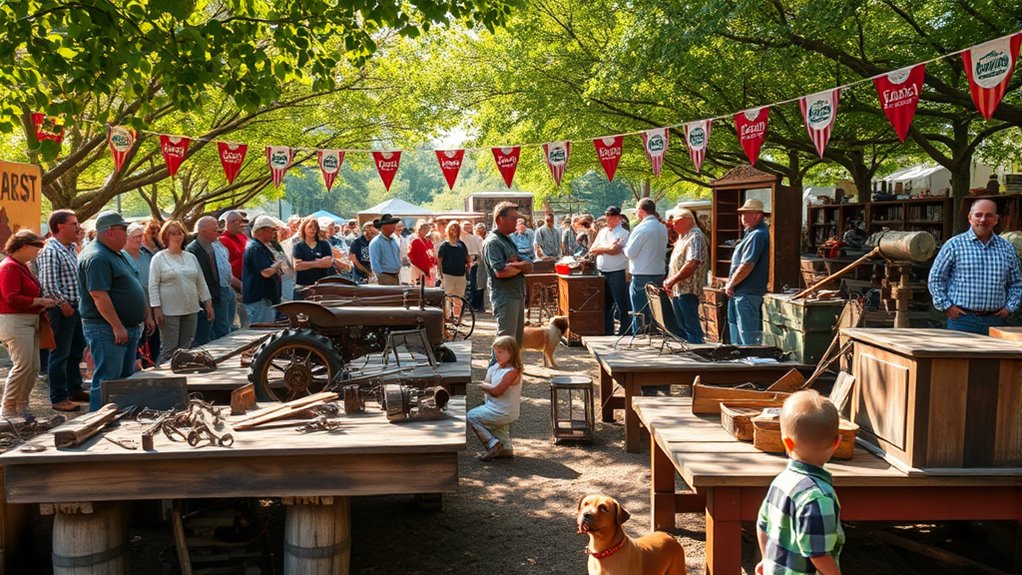
Are you considering buying or selling farm equipment or estate assets? If so, understanding the traditions behind farm auctions and estate sales can make the process smoother and more successful. These sales often follow longstanding customs that help guarantee fair transactions and preserve the value of the items involved. Whether you’re looking to liquidate farm machinery or estate collectibles, knowing what to expect can give you a significant advantage.
One of the key elements in estate sales, especially those involving older items, is antique valuation. When handling estate assets, you might come across antiques or vintage farm equipment that require expert assessment. Proper antique valuation not only helps set realistic prices but also attracts the right buyers. If the estate includes heirlooms or collectibles, getting an accurate valuation ensures you don’t undervalue or overprice these items, which can impact overall sale success. Estate planning plays a vital role here, as organizing and cataloging assets beforehand makes the auction process more efficient. When you have a clear inventory, it’s easier to decide which items to sell, how to promote them, and how to structure the sale for maximum return. Proper estate planning also helps prevent disputes among heirs and simplifies tax considerations.
Antique valuation and organized estate planning ensure fair prices and smooth asset liquidation.
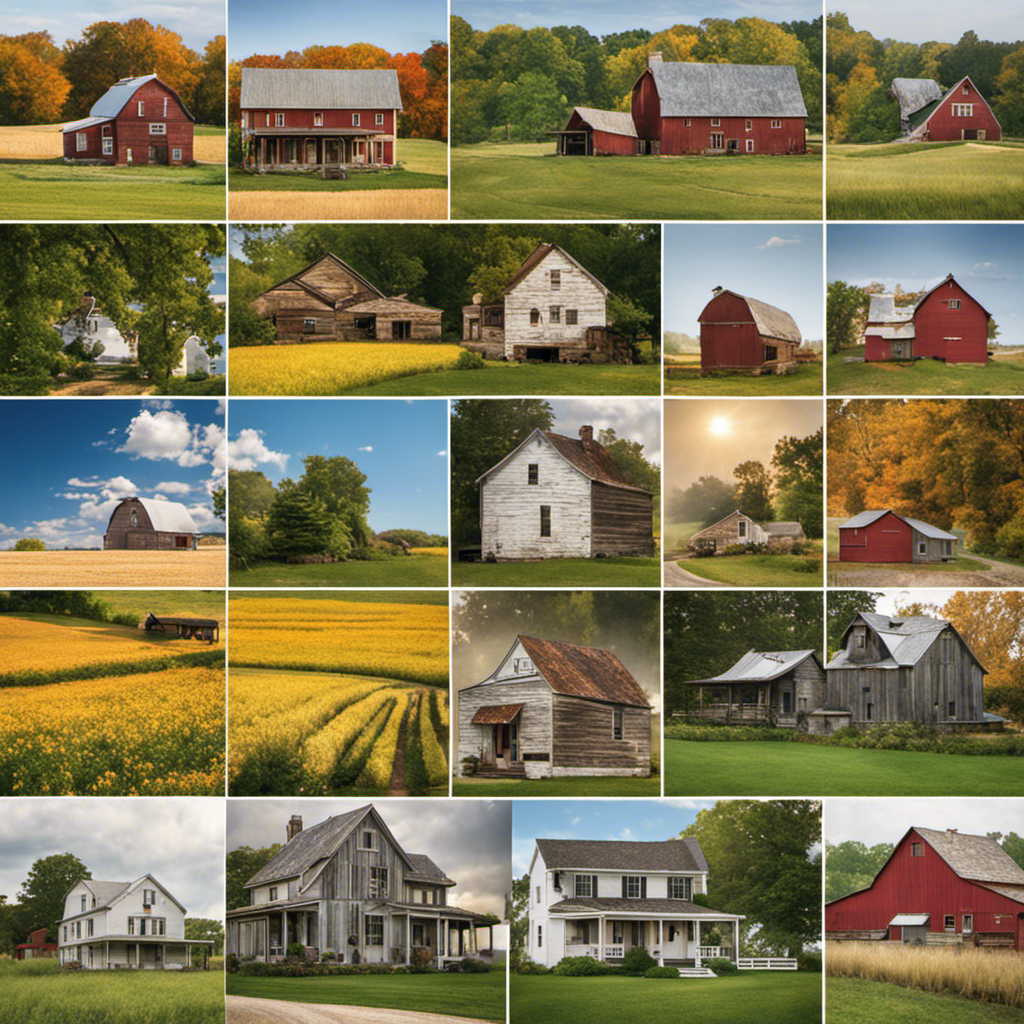
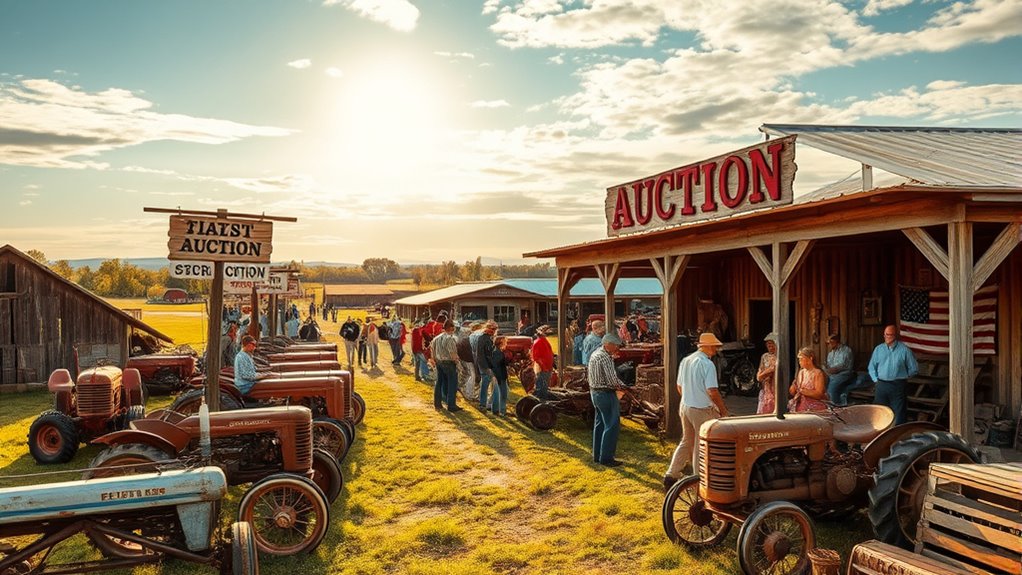
Farm auctions often follow specific traditions that have persisted for generations. These customs foster transparency and trust, encouraging participation from a broad range of buyers. For example, auctioneers typically use lively, rhythmic calls to drum up bidding excitement, creating a sense of urgency. Bidders appreciate the clear, organized process, which often involves preview days where potential buyers can inspect items beforehand. This tradition of previewing helps guarantee everyone knows what they’re bidding on and can make informed decisions. Additionally, many farm auctions include a mix of equipment, livestock, and even land, making them versatile sales events.
Estate sales, meanwhile, tend to focus on efficiently liquidating personal property, often in a single day or over a weekend. These sales are usually held directly by families or estate representatives, following local customs to attract local buyers and collectors. It’s common for estate sales to feature a wide range of items, from furniture and jewelry to tools and farm memorabilia. The auction process itself creates a lively environment where buyers can compete openly, often leading to higher prices for desirable items. Throughout all these traditions, transparency, fair pricing, and community participation remain central. When you understand and respect these customs, you’ll find that farm auctions and estate sales can be both profitable and smooth experiences, helping you navigate the complexities of estate planning and asset liquidation with confidence.

HOT-SHOT® Livestock Sorting Paddles | Cattle Sorting Paddle | Livestock Handling Equipment | Farm and Ranch Rattle Paddle | 48" Green
- High Visibility: 6.25-inch-wide visual barrier with BBs
- Comfortable Grip: Golf-style ergonomic handle
- Easy to Clean: Vinyl-covered for protection and cleaning
As an affiliate, we earn on qualifying purchases.
As an affiliate, we earn on qualifying purchases.
Frequently Asked Questions
How Do I Register to Bid at Farm Auctions?
To register to bid at farm auctions, you need to complete the auction registration process. Visit the auction’s registration desk or online platform, provide your identification, and fill out any required forms. This process guarantees your bid eligibility is confirmed, allowing you to participate confidently. Make sure to review the auction’s registration requirements beforehand, and keep your registration details handy for quick and smooth bidding during the event.
What Payment Methods Are Accepted at Estate Sales?
Payment options at estate sales are as varied as a painter’s palette. You’ll typically find cash, credit or debit cards, and sometimes mobile payment methods like PayPal or Venmo. Always check ahead to see which transaction methods are accepted, so you’re not left stranded like a boat without a paddle. Being prepared with your preferred payment options makes the buying process smooth and stress-free.
Are There Any Hidden Fees or Commissions?
You won’t find hidden fees or commissions at estate sales, but it’s wise to check auction house etiquette beforehand. Some sales may charge a buyer’s premium or registration fee, so ask about those details early. Use bidding strategy tips like setting a maximum bid and sticking to your budget. Being informed and clear on costs helps you avoid surprises and makes the auction experience more enjoyable.
How Can I Preview Items Before the Auction?
You can preview items before the auction by attending the preview inspection days scheduled by the auction house. During these sessions, you get the chance to closely examine the items and ask questions. Additionally, many auctions offer catalog browsing online or in print, giving you a detailed look at what’s available. Take advantage of these options to make informed bidding decisions and avoid surprises during the auction.
What Are the Typical Auction Day Procedures?
On auction day, you arrive early to register and preview items, practicing your bidding strategies. Follow auction etiquette by listening carefully and raising your paddle confidently when you’re ready to bid. Stay attentive to the auctioneer’s cues and bid clearly to avoid confusion. When you win, complete your payment promptly. Remember, sticking to these procedures helps guarantee a smooth experience and shows respect for the auction process.
Conclusion
So, next time you find yourself at a farm auction or estate sale, remember—you’re not just buying old tractors or grandma’s china; you’re participating in a glorious tradition of bargaining, storytelling, and maybe even slightly embarrassing dance moves. Embrace the chaos, haggle like a pro, and leave with more than you bargained for—like a newfound appreciation for farm life or just a really quirky lamp. Happy bidding, and don’t forget to wear your lucky hat!