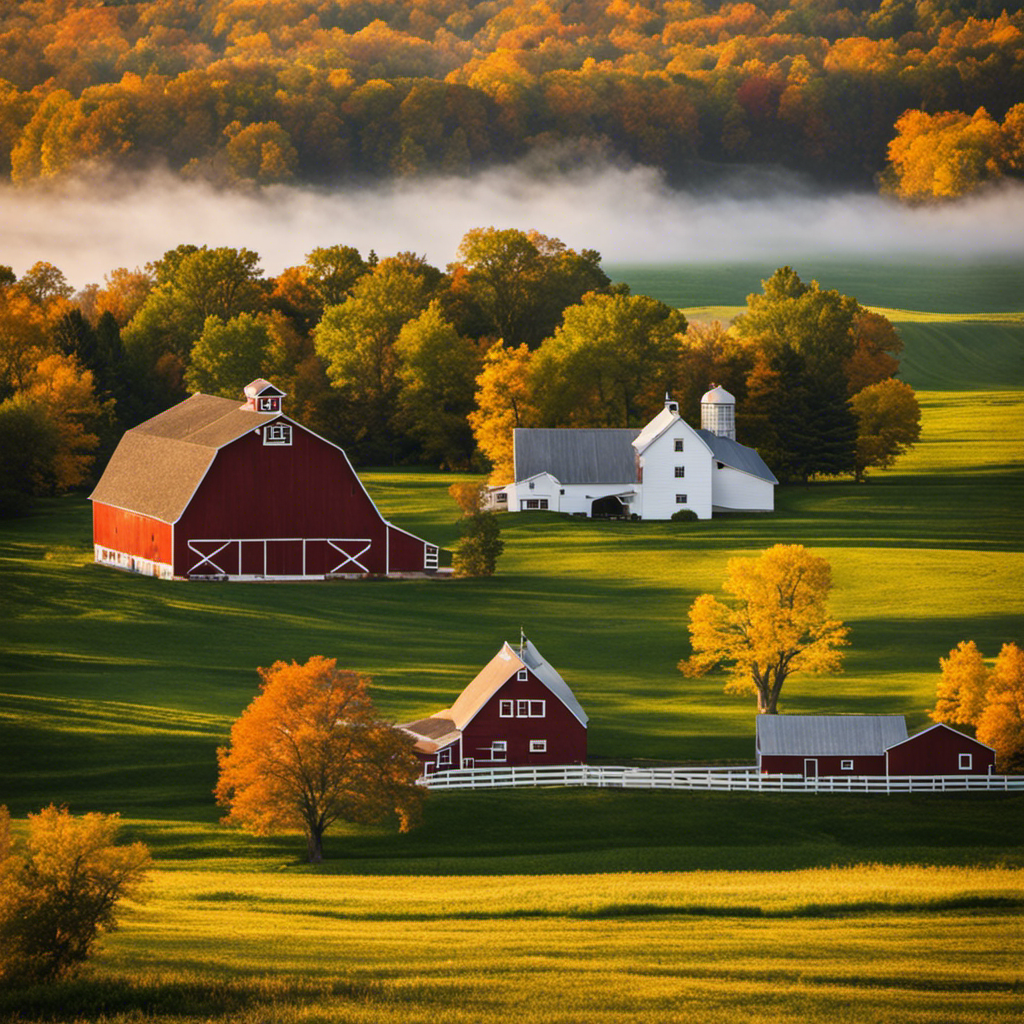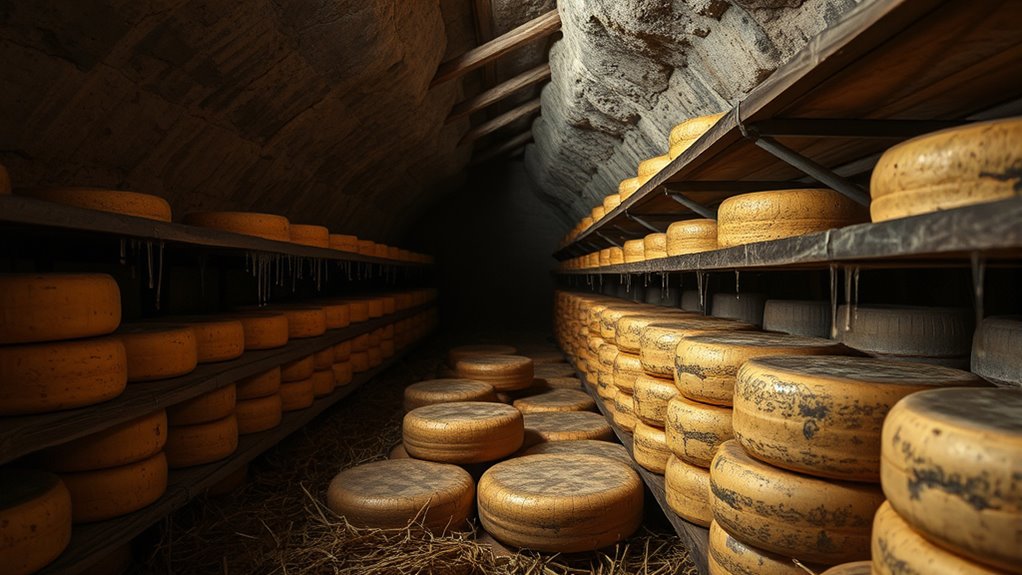

In Wisconsin, cheese caves use natural cave environments combined with scientific techniques to create ideal aging conditions. You’ll see how microbes and molds break down fats and proteins, transforming fresh curds into flavorful cheeses. Experts carefully control temperature, humidity, and airflow to guide fermentation processes, ensuring consistent quality. This blend of tradition and science preserves Wisconsin’s cheesemaking legacy while enhancing flavor development. There’s much more to discover about how dairy science plays a key role—that’s just the start.
Key Takeaways
- Wisconsin cheese caves provide controlled environments that optimize microbial activity for traditional and scientific cheese aging.
- Microbes and molds in caves break down fats and proteins, developing complex flavors during maturation.
- Scientific management of cave conditions ensures consistent cheese quality and flavor development.
- Caves serve as cultural symbols, blending traditional cheese-making techniques with modern dairy science.
- The integration of science and tradition in Wisconsin caves preserves artisanal methods while enhancing cheese quality.
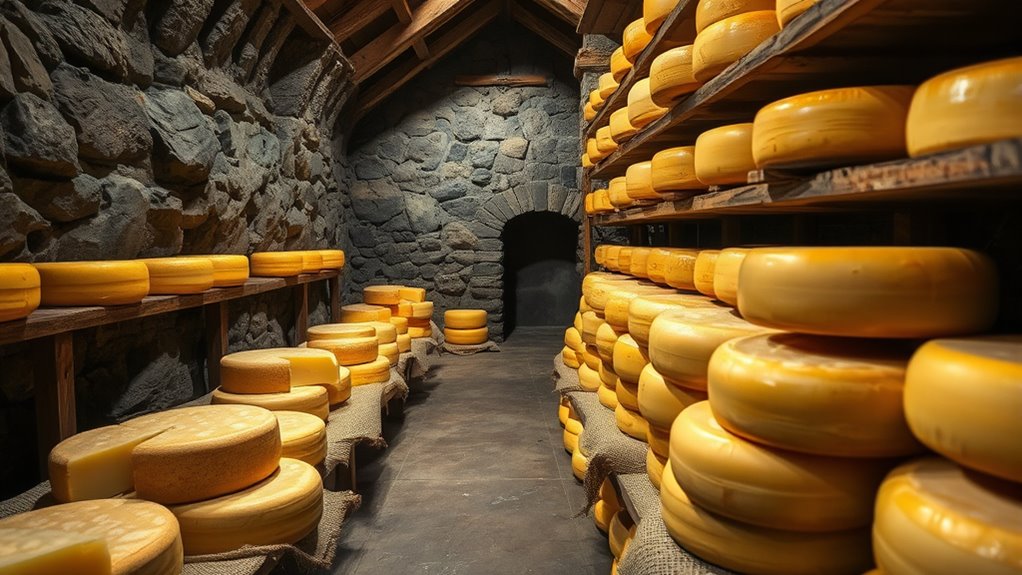
Wisconsin’s rich dairy heritage is closely tied to its unique cheese aging process, which often takes place in underground cheese caves. These caves provide the ideal environment for cheese aging, offering consistent temperature and humidity levels that are essential for developing complex flavors. As you explore the world of dairy science in Wisconsin, you’ll discover that cheese aging isn’t just about time; it’s a carefully managed process rooted in dairy fermentation principles. During this stage, microbes and molds break down fats and proteins, transforming fresh curds into the rich, flavorful cheeses loved worldwide.
Wisconsin’s cheese caves create ideal environments for complex, flavorful cheese aging through careful scientific and traditional methods.
In these underground caves, the environment plays a critical role in shaping the final product. The cool, damp conditions slow down microbial activity, allowing cheese to mature gradually. This controlled environment helps preserve the delicate balance of bacteria and molds essential for dairy fermentation. You might notice that each cheese develops its own unique character depending on the cave’s specific conditions — temperature fluctuations, airflow, and humidity all influence flavor and texture. This natural aging process is a reflection of the intricate relationship between cheese and its environment, a hallmark of Wisconsin’s cheese-making tradition.
As you learn more, you realize that cheese aging in these caves isn’t just an art; it’s rooted in scientific principles. Dairy fermentation during cheese aging involves a complex interplay of microorganisms, which convert lactose into lactic acid and produce flavor compounds. These microbes are carefully cultivated and sometimes introduced intentionally to achieve desired characteristics. The underground caves serve as a living laboratory where microbiologists and cheesemakers monitor and adjust conditions to optimize fermentation and guarantee consistent quality. Controlled environment plays a vital role in maintaining the ideal conditions for microbial activity and cheese maturation.
You’ll also find that cheese caves serve as a cultural symbol, preserving age-old techniques while embracing modern scientific insights. Cheesemakers often compare their caves to natural aging cellars, but in reality, they are carefully maintained environments where dairy fermentation can proceed at its ideal pace. By controlling temperature, humidity, and airflow, they foster the growth of beneficial molds and bacteria, enhancing flavor development. This meticulous process ensures that each batch of cheese matures to perfection, reflecting Wisconsin’s dedication to quality and tradition.
In essence, Wisconsin’s cheese caves embody the perfect marriage of science and tradition, where dairy fermentation and cheese aging come together to produce the exceptional cheeses that define the state’s culinary identity.
As an affiliate, we earn on qualifying purchases.
Frequently Asked Questions
How Do Cheese Caves Influence Local Wisconsin Economies?
Cheese caves boost your local Wisconsin economy by attracting cheese cave tourism, drawing visitors enthusiastic to see traditional aging methods. This influx supports local businesses, hotels, and restaurants. Plus, they enhance local cheese branding, making your region’s cheeses more recognizable and desirable. As more tourists and cheese enthusiasts visit, your community benefits economically while celebrating Wisconsin’s rich cheese heritage. It’s a win-win for growth and local pride.
What Are the Environmental Impacts of Cheese Cave Operations?
Environmental impacts of cheese cave operations can be significant. You might notice a notable environmental footprint from energy consumption needed to maintain ideal cave conditions. These operations often require constant climate control, which can lead to increased energy use and emissions. However, many producers are adopting eco-friendly practices like renewable energy and efficient insulation, helping to reduce their environmental footprint and lessen negative impacts on the environment.
How Is Cheese Aging Monitored Within These Caves?
You monitor cheese aging in caves through microbial monitoring and humidity control. You regularly check microbial levels to guarantee proper ripening and prevent spoilage, using swabs and lab tests. Humidity levels are carefully maintained to keep the cheese’s texture and flavor consistent, often with humidifiers or dehumidifiers. These practices help you produce high-quality cheese by creating ideal conditions for aging, ensuring each batch meets safety and flavor standards.
Are There Unique Microbial Communities in Wisconsin Cheese Caves?
Did you know that Wisconsin cheese caves harbor over 200 distinct microbial species? You’ll find a unique cave microbiome that contributes to the cheese’s flavor and aging process. This microbial diversity is essential, as it influences the development of characteristic textures and tastes. By understanding these communities, you can appreciate how the cave environment shapes Wisconsin’s iconic cheeses, making each batch uniquely flavorful and complex.
What Innovations Are Emerging in Cheese Cave Technology?
You’ll see innovations like automated climate control systems that precisely regulate humidity and temperature, ensuring ideal aging conditions. Microbial monitoring technology is also advancing, allowing you to track the growth of beneficial microbes in real-time. These improvements help maintain consistent cheese quality, reduce aging time, and enhance safety. By integrating these innovations, you can maximize your cheese cave processes, leading to better flavors and more efficient production.
Conclusion
Just like the legendary caves where cheese ages to perfection, Wisconsin’s dairy science reveals how tradition and innovation blend seamlessly. By exploring these cheese caves, you tap into a rich heritage that rivals Homer’s epic tales, grounded in centuries of craftsmanship. So, whether you’re a cheese lover or curious explorer, remember that Wisconsin’s dairy mastery isn’t just about cheese — it’s about preserving a storied legacy that continues to inspire and delight.