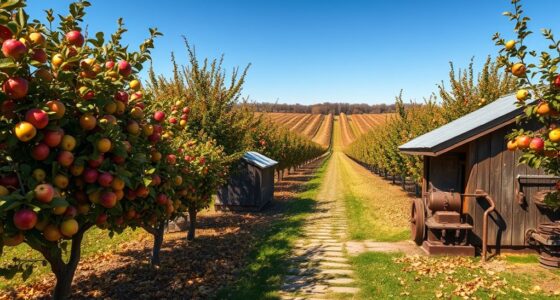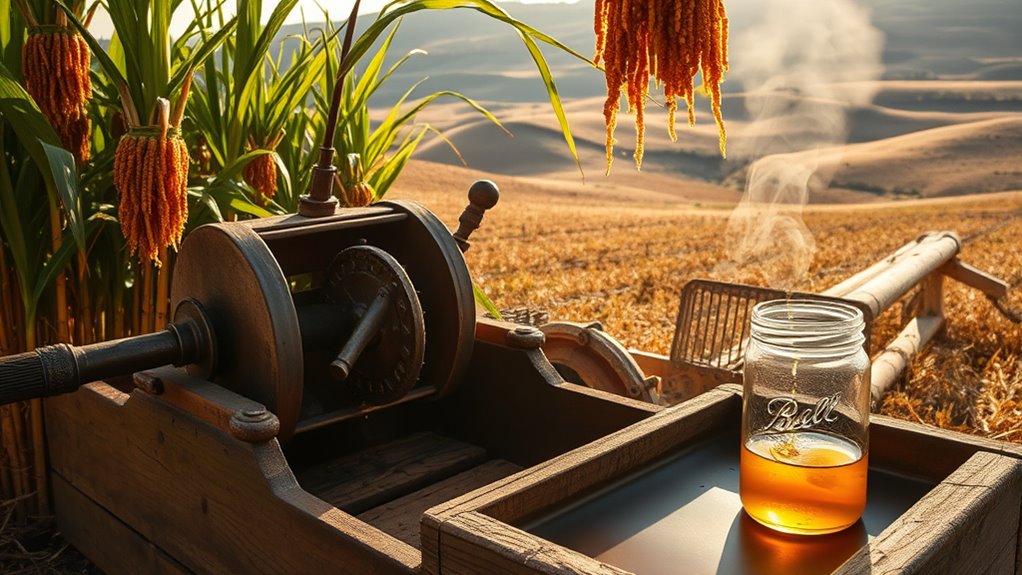

In Kentucky, sorghum is a cherished part of local farming traditions, transforming from hardy stalks into flavorful syrup. You’ll see it grow in warm, sunny conditions, with farmers harvesting it in late summer or early fall. The stalks are crushed or pressed to extract juice, which is then carefully heated to evaporate water, producing rich, full-bodied syrup. Keep exploring to discover more about this centuries-old craft and its unique flavor.
Open a free Amazon Business account
Business pricing, bulk buying and tax-exempt orders.
As an affiliate, we earn on qualifying purchases.
Key Takeaways
- Kentucky’s sorghum, rooted in local farming traditions, is cultivated mainly for syrup production alongside other regional crops.
- Sorghum plants are grown in warm, well-drained soil, harvested in late summer or early fall.
- Harvested stalks are crushed or pressed using traditional or mechanical methods to extract juice.
- The juice is filtered and heated in kettles or evaporators to concentrate into syrup through evaporation.
- Traditional processing yields a rich, earthy syrup valued for its unique flavor and craftsmanship.
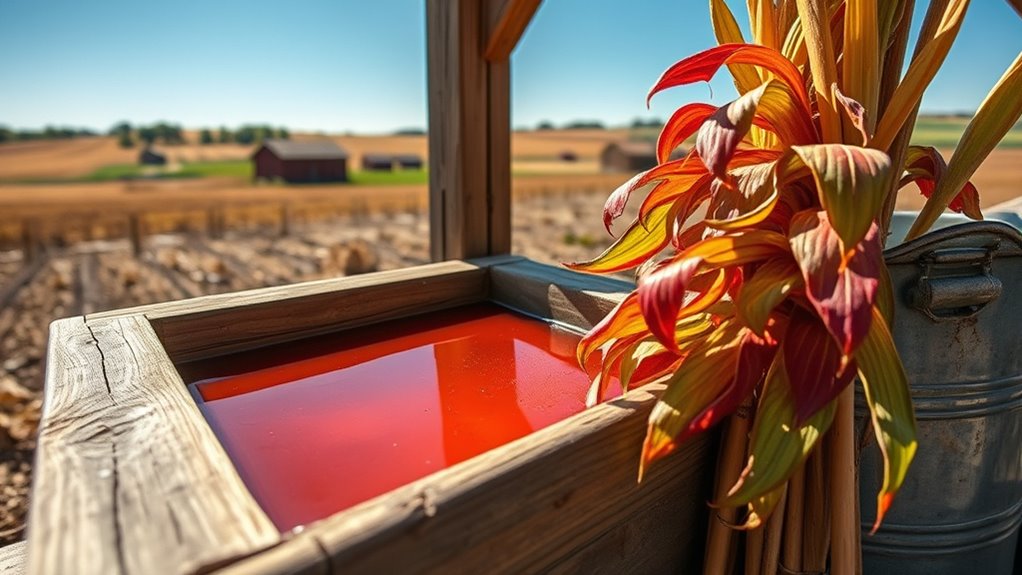
Have you ever considered how Kentucky’s rich agricultural heritage extends beyond bourbon to include thriving sorghum production? While bourbon often takes center stage, sorghum has carved out its own niche, rooted in the state’s farming traditions. If you’re curious about how sorghum goes from a simple crop to sweet syrup, understanding sorghum cultivation and syrup production techniques is key. Growing sorghum requires specific conditions—warm weather, well-drained soil, and ample sunlight. Farmers plant the seeds in early spring, allowing the plants to grow vigorously throughout the summer. The crop is hardy, resistant to drought, and can thrive where other crops might struggle, making it an ideal choice for Kentucky’s varied landscape. As the plants mature, typically by late summer or early fall, harvest begins. The stalks are carefully cut and gathered, ready to be processed into syrup.
Once harvested, the sorghum stalks undergo a series of steps that transform them into syrup. This is where syrup production techniques come into play. First, the stalks are crushed or pressed to extract the juice. Traditionally, this was done with large grinding mills powered by animals or water, but modern methods often involve mechanical presses for efficiency. The extracted juice is then filtered to remove any solids or debris, ensuring a smooth syrup. From here, the juice is heated in large kettles or evaporators. As it simmers, the water begins to evaporate, thickening the liquid into syrup. Skilled syrup makers monitor the temperature carefully, aiming for the precise point where the syrup reaches the desired consistency and flavor. This process is essential because overcooking can lead to a bitter taste, while undercooking results in a runny product.
Throughout the process, traditional techniques are still valued for imparting unique flavors to Kentucky sorghum syrup. Many producers take pride in small-batch methods that emphasize quality over quantity. The final product boasts a rich, robust flavor that’s distinct from other sweeteners, often described as earthy and full-bodied. It’s this combination of careful sorghum cultivation and meticulous syrup production techniques that gives Kentucky sorghum its authenticity and charm. Whether used as a topping, sweetener, or ingredient, it’s a testament to the state’s agricultural ingenuity. So, next time you enjoy that thick, amber syrup, remember the journey it took from field to table—farmed with care and crafted with tradition.
As an affiliate, we earn on qualifying purchases.
Frequently Asked Questions
What Are the Nutritional Benefits of Kentucky Sorghum Syrup?
Kentucky sorghum syrup offers notable nutritional benefits, including antioxidant properties that help protect your cells from damage. It also contains dietary fiber, which supports healthy digestion. Unlike refined sweeteners, it’s a more natural choice, providing essential nutrients and energy. By choosing this syrup, you enjoy a flavorful, wholesome sweetener that contributes to your overall health and wellness.
How Does Kentucky Sorghum Syrup Compare to Maple Syrup?
You’ll find Kentucky sorghum syrup boasts a bold, earthy flavor profile, often richer and more robust than maple syrup’s sweet, smooth notes. While production methods differ—sorghum syrup’s traditional boiling and grinding process contrasts with maple’s tapping and boiling—the result is a syrup with a hearty, rustic charm. If you favor fuller, more complex flavors, Kentucky sorghum syrup offers a distinctive, satisfying alternative to the sweet, delicate taste of maple syrup.
Can Sorghum Be Used in Gluten-Free Recipes?
Yes, sorghum can be used in gluten-free baking. You can incorporate sorghum flour in your recipes to replace traditional wheat flour, making your baked goods gluten-free. Sorghum flour uses include muffins, bread, and pancakes, adding a mild, sweet flavor. When baking gluten-free, combining sorghum flour with other gluten-free flours enhances texture and taste, making your recipes both delicious and suitable for those avoiding gluten.
What Pests Commonly Affect Sorghum Crops in Kentucky?
Beware, pests can threaten your sorghum crop in Kentucky. Common culprits include fall armyworms, sorghum midge, and aphids, all of which can devastate your harvest. To protect your crop’s resilience, you must stay vigilant with pest management strategies. Regular scouting and timely interventions are essential. If you ignore these threats, your sorghum’s health and yield could plummet — so act now to safeguard your fields.
How Long Does It Take to Harvest Sorghum for Syrup?
You can typically harvest sorghum for syrup around 90 to 120 days after planting, depending on crop maturity and growing conditions. Harvest timing is essential; wait until the grains are fully mature and the stalks have reached the right sweetness level. Keep an eye on the weather and plant health, as these factors influence when you can safely and effectively harvest your sorghum for the best syrup quality.
Conclusion
Now that you know Kentucky sorghum’s journey from cane to syrup, you can appreciate its rich history and craftsmanship. Did you know that Kentucky produces over 10,000 gallons of sorghum syrup annually? That’s enough to sweeten countless recipes and support local farmers. Next time you enjoy a spoonful, remember the hard work and tradition behind it. Kentucky sorghum isn’t just a sweet treat; it’s a flavorful piece of the state’s heritage.
NFL season / tailgating Picks
team gear
As an affiliate, we earn on qualifying purchases.