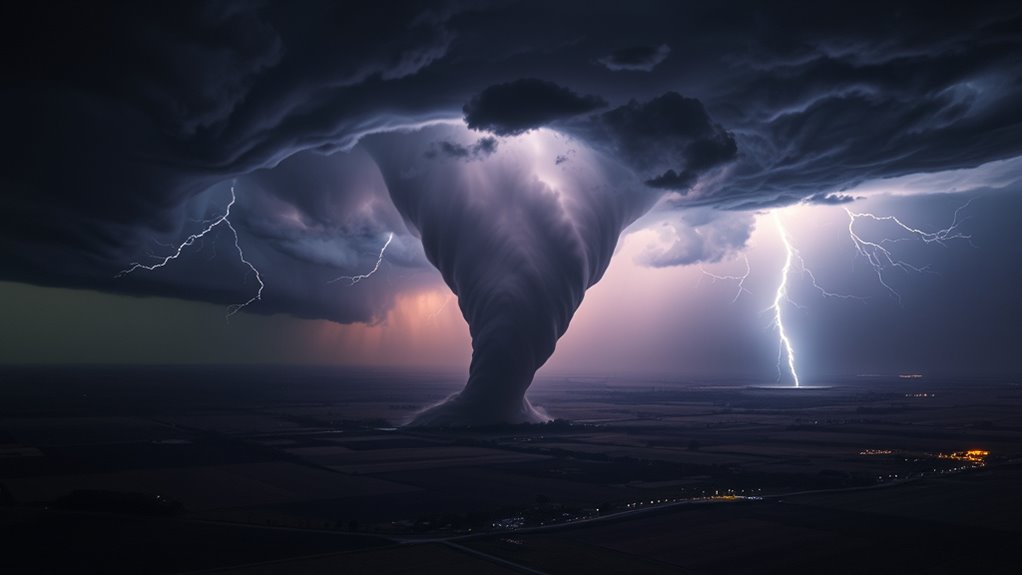

Having a sturdy tornado cellar and an early warning system in place can greatly increase your safety during severe storms. Make sure your tornado cellar is well-maintained, reinforced, and accessible at all times. Use NOAA weather radios and smartphone alerts to get real-time updates, so you can act quickly. Practice safety drills regularly with your family. Staying prepared with these tools can make all the difference—continue exploring how to strengthen your tornado safety plans.

Get furniture and decor delivered free — and shop member deals
- Fast, free delivery on millions of items
- Access to Prime Big Deal Days deals on October 6–7
- Prime Video, Amazon Music and more included
Key Takeaways
- Tornado cellars are underground shelters designed to withstand high winds and debris, providing safety during tornadoes.
- Early warning systems like NOAA radios and smartphone alerts give critical seconds to reach tornado cellars.
- Regularly practicing shelter drills ensures quick, calm access to tornado cellars during emergencies.
- Maintaining clear, accessible routes to tornado cellars enhances safety and minimizes delays during storms.
- Staying informed about local weather alerts during tornado season ensures timely activation of tornado cellars and safety plans.

When a tornado threatens, having a safe shelter can mean the difference between life and death. That’s why storm preparedness is essential. Knowing where to go and what to do can help you stay safe when severe weather strikes. The first step is to identify a reliable shelter, such as a tornado cellar or a designated safe room, and ensure it’s ready at all times. A tornado cellar provides a sturdy, underground space built specifically to withstand high winds and flying debris. If you don’t have a cellar, a small, interior room on the lowest floor—away from windows—can serve as a temporary safe spot. Regularly practicing safety protocols with your family ensures everyone knows what to do when alerts come through.
Having a reliable shelter and practicing safety protocols can save lives during a tornado.
Early warning systems play a crucial role in storm preparedness. Modern alerts, such as NOAA weather radios or smartphone notifications, give you vital seconds or even minutes to seek shelter. When you receive a warning, act immediately. Don’t wait to see if the storm will pass or for official instructions; your quick response can save lives. Keep emergency supplies in your shelter, including water, non-perishable food, a flashlight, batteries, and a first aid kit. Confirm that everyone in your household knows the location of your tornado cellar or safe room and understands the safety protocols to follow. Having a plan in place eliminates confusion during high-stress moments and helps you move swiftly to safety.
It’s equally important to maintain your shelter regularly. Check the structural integrity of your tornado cellar or safe room, ensuring it’s free of debris and easily accessible. Reinforce doors, windows, and walls if needed, and verify that communication devices work properly. Practicing your safety protocols periodically, such as through drills, helps reinforce your team’s readiness. During these drills, simulate the process of seeking shelter quickly and calmly, so everyone becomes familiar with the routine.
Remember that storm preparedness isn’t a one-time effort. Keep your emergency kit stocked and update it annually. Stay informed about local weather patterns and watch for alerts during tornado season. By integrating these practices into your routine, you guarantee that when a tornado threatens, you’re prepared to respond swiftly and safely. Having a dependable tornado cellar or shelter, understanding safety protocols, and staying alert to early warnings are your best defenses against the destructive power of tornadoes. Your readiness can make all the difference in protecting yourself and your loved ones. Incorporating data-driven strategies can further enhance your preparedness plan by providing measurable results and insights.
As an affiliate, we earn on qualifying purchases.
Frequently Asked Questions
How Accurate Are Tornado Cellars in Predicting Tornadoes?
Tornado cellars are not designed for tornado prediction but are excellent for shelter safety during a tornado. They provide a secure space when a tornado is nearby, but they can’t forecast future tornadoes. For accurate tornado prediction, rely on weather alerts and forecasts. Always have a plan and make sure your cellar is well-stocked and accessible, so you stay safe and protected when severe weather strikes.
What Materials Are Used to Construct Tornado Cellars?
Like a fortress from a myth, tornado cellars are built with reinforced concrete and steel framing, ensuring strength and safety. You’ll find these durable materials work together to withstand the force of a tornado, providing protection when it strikes. Reinforced concrete offers resilience against impacts, while steel framing adds flexibility and strength. Together, they create a secure haven where you can weather the storm, much like a legendary stronghold.
Can Tornado Cellars Be Built Underground or Above Ground?
You can build tornado cellars either underground or above ground, depending on your storm shelter design preferences. Underground shelters offer maximum protection and are common in areas prone to severe storms, while above-ground options are easier to install and access. Your choice depends on space, safety considerations, and local building codes. Both designs aim to keep you safe during tornadoes, but underground shelters typically provide better protection against high winds.
How Long Does It Take to Evacuate to a Tornado Cellar?
Evacuating to a tornado cellar is like catching a swift, fleeting shadow—you need quick reflexes. Usually, your evacuation time depends on your shelter readiness and how close you are. If you’re prepared, it takes just a minute or two to reach safety. Make certain your shelter is always accessible and ready, so when danger strikes, your evacuation is smooth and swift, giving you peace of mind amid chaos.
Are Tornado Cellars Effective Against All Tornado Intensities?
Tornado cellars are highly effective against most tornado intensities, but their storm shelter effectiveness depends on construction materials and design. If built with reinforced concrete, steel, or other sturdy materials, they can withstand strong winds and debris. However, very powerful tornadoes, especially EF4 and EF5, may still pose risks. Always make certain your cellar is properly constructed and maintained for maximum protection during a tornado.
Conclusion
So, next time a tornado warning hits, don’t just sit there hoping it’s a false alarm. Plunge into your cellar, embrace your inner survivalist, and maybe even thank those ominous clouds for the free adrenaline rush. Remember, while weather apps are great, a sturdy cellar beats a soggy couch every time. Stay prepared, stay safe, and keep your tornado plans as airtight as your basement. Because, really, what’s more fun than a natural disaster party?
Fall Picks
fall essentials
As an affiliate, we earn on qualifying purchases.