
Tenant farming in the North and South varies greatly. In the South, sharecropping kept farmers in debt, often rooted in racial and economic inequalities, with landowners controlling resources. In contrast, the North’s tenant systems were less exploitative, offering more economic mobility and fewer dependencies. These differences stem from regional history, social structures, and economic opportunities. If you explore further, you’ll uncover how these systems shaped regional social and economic landscapes long after, influencing today’s disparities.
Key Takeaways
- Sharecropping was prevalent in the South, often leading to debt, while the North favored less exploitative tenant arrangements.
- Southern tenant farmers faced greater economic disparities and limited mobility compared to their Northern counterparts.
- The South’s sharecropping system reinforced racial and economic inequalities rooted in post-slavery history.
- Northern tenant farming was less influenced by racial discrimination, offering more economic opportunities and resource control.
- Modern analysis shows regional differences in agricultural labor systems reflect broader social, economic, and historical contexts.
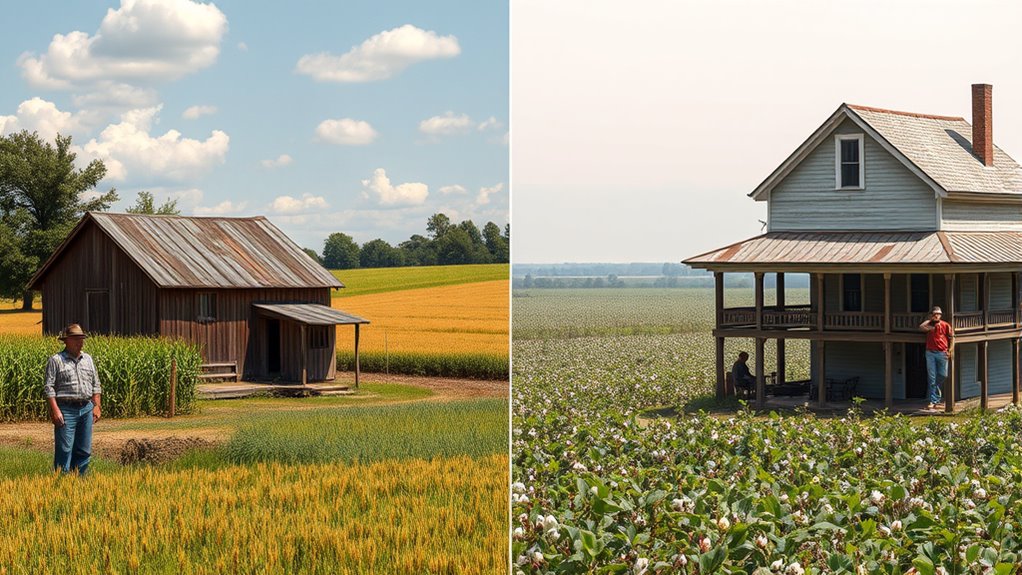
Have you ever wondered how tenant farming differed between the North and South? The answer lies in the distinct sharecropping practices and economic disparities that shaped each region’s agricultural landscape. In the South, tenant farming often involved sharecropping, a system where farmers worked land owned by wealthier landowners in exchange for a portion of the crops produced. This arrangement kept many farmers in a cycle of debt, as they borrowed supplies and tools from landowners, and their share of the harvest barely covered those costs. Over time, sharecropping became a way for landowners to maintain control over both the land and labor force, reinforcing economic disparities rooted in history and social structure. Many tenant farmers in the South faced limited mobility and struggled with poverty, as they lacked the resources to buy land or improve their economic standing. Their dependence on landowners for credit and supplies often meant they remained trapped in a cycle of debt, unable to break free from the system. Additionally, the rise of digital platforms in recent years has made it easier to understand regional agricultural systems and disparities through online research.
In contrast, tenant farming in the North took on a somewhat different character. While sharecropping did exist in parts of the North, it was less widespread and often less exploitative. Many Northern tenant farmers rented land outright or paid a fixed rent, giving them more control over their work and income. The economy in the Northern states was more diversified, with industries and urban centers providing alternative opportunities for farm workers. As a result, the economic disparities between tenant farmers and landowners in the North were less pronounced than in the South. Northern tenant farmers generally had a better chance of saving money, purchasing land, or progressing into independent farming. Their relationship with landowners was often more balanced, with clearer agreements and fewer manipulative practices.
The contrast between sharecropping practices and economic disparities in the North and South reveals how regional history and social structures influenced tenant farming. In the South, the system perpetuated cycles of poverty and dependence, rooted in the legacy of slavery and racial discrimination. Meanwhile, in the North, tenant farmers had more opportunities for economic mobility and independence, though they still faced challenges. Understanding these differences helps you grasp why tenant farming persisted in varied forms across the United States and how regional economic disparities shaped the lives of countless farmers. It’s a story of how systems of agricultural labor and regional history intertwined to create contrasting experiences for tenant farmers, ultimately reflecting broader social inequalities that have persisted for generations.
As an affiliate, we earn on qualifying purchases.
Frequently Asked Questions
How Did Tenant Farming Impact Southern Economic Development?
Tenant farming impacted southern economic development by maintaining reliance on sharecropping systems, which limited agricultural productivity. You might notice that these systems kept farmers trapped in cycles of debt, preventing investments in better technology or land improvements. As a result, the economy remained stagnant, slowing overall growth. This system kept wealth concentrated among landowners, hindering broader economic development and opportunities for tenant farmers to improve their livelihoods.
Were Tenant Farmers in the North More Likely to Own Land?
You might think tenant farmers in the North owned more land, but regional disparities tell a different story. While some North tenant farmers had opportunities for land ownership, many remained renters, similar to their Southern counterparts. The key difference is that land ownership was generally more accessible in the North, fostering greater economic stability. So, despite regional differences, tenant farmers often faced similar challenges regardless of their location.
What Legal Differences Affected Tenant Farmers in North and South?
You’ll find that legal differences markedly affected tenant farmers’ land ownership and tenancy laws in the North and South. In the South, tenancy laws often favored landowners, making it harder for tenants to own land or improve their conditions. Conversely, the North had more progressive tenancy laws supporting tenant rights, giving farmers better protection and more opportunities to own land. These legal frameworks shaped each region’s tenant farming experience profoundly.
How Did Tenant Farming Influence Racial Dynamics in Each Region?
You might find it surprising that over 90% of sharecroppers in the South were Black, fueling racial segregation and limiting social mobility. Tenant farming reinforced these divisions by keeping Black farmers in subordinate roles, perpetuating inequality. In the North, fewer Black tenant farmers faced such harsh segregation, but racial disparities still impacted opportunities. Overall, tenant farming deeply influenced racial dynamics, often entrenching segregation and restricting social mobility in both regions.
Did Tenant Farming Decline at Different Rates in North and South?
You’ll find that tenant farming decline occurred at different rates in the North and South, highlighting regional disparities. In the South, tenant farming persisted longer due to lingering economic and social factors, while the North saw a quicker decline as industrialization and land reforms took hold. These differences shaped regional agricultural practices and affected local communities, emphasizing the uneven progress across the United States during that period.
Conclusion
As you reflect on tenant farming across the North and South, you see the delicate dance of opportunity and tradition, like a gentle breeze shaping the landscape. While the North offers a sturdy foundation, the South whispers of a history etched in the soil. Both paths, though different, invite you to imagine a future where resilience blooms quietly beneath the surface, much like dawn’s first light softly illuminating a field—hopeful, tender, and quietly enduring.