To prevent frozen pipes in just an afternoon, quickly insulate any vulnerable pipes using foam sleeves or tape, especially in unheated areas. Install heating cables around pipes that are at risk and plug them into outlets, setting the thermostats to activate only in cold weather. To keep water flowing, leave a trickle running from outdoor or exposed taps. For more effective tips, discover additional simple steps you can take today.
Key Takeaways
- Insulate exposed pipes quickly with foam sleeves or insulating tape to retain heat in a short timeframe.
- Use portable pipe heating cables with built-in thermostats for immediate heating of vulnerable pipes.
- Open cabinet doors under sinks to allow warm indoor air to circulate around pipes.
- Keep a steady trickle of water flowing through outside or unheated pipes to prevent freezing.
- Seal gaps around windows and doors to maintain interior warmth and reduce the risk of pipe freezing.
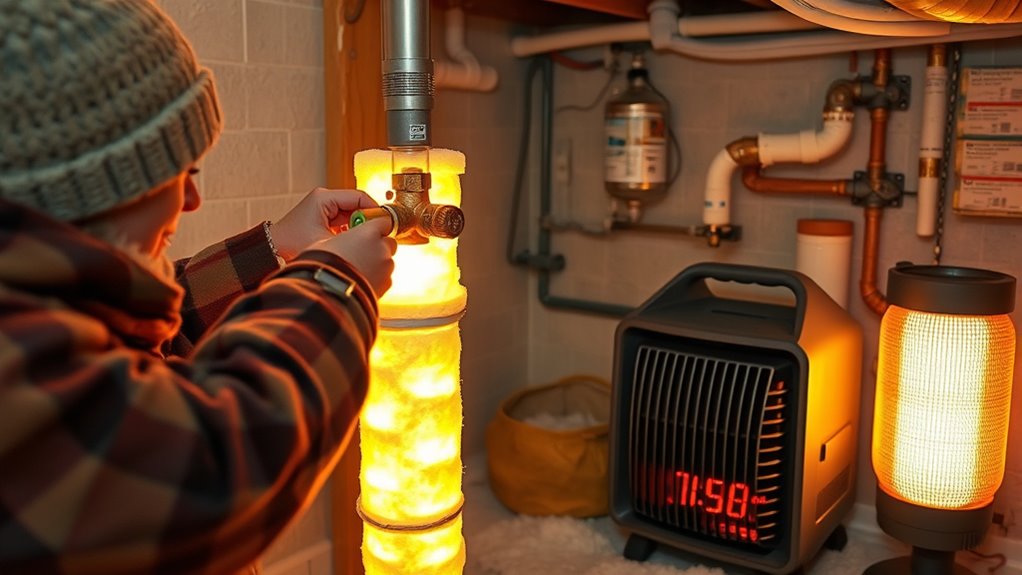
Have you ever experienced the hassle of dealing with frozen pipes during winter? It’s frustrating to wake up and find your water isn’t flowing, especially when you’re pressed for time. Luckily, you can prevent this headache in just one afternoon by applying some straightforward strategies. One of the most effective ways is to improve insulation techniques around your pipes. You want to ensure that your pipes are well-insulated, especially those running through unheated areas like basements, attics, or garages. Foam pipe insulation sleeves are affordable and easy to install—simply cut them to size and slide them over exposed pipes. For pipes that are harder to reach, you can wrap them with insulating tape or even use fiberglass insulation for added protection. These techniques create a barrier that helps retain heat and prevents the water inside from freezing. Proper insulation not only protects against cold but also helps conserve energy by maintaining a consistent temperature around your pipes.
In addition to insulation, consider installing pipe heating cables. These cable systems are a smart investment because they provide direct heat to vulnerable pipes, especially in colder climates. You simply wrap the heating cables around the pipes and plug them into a standard electrical outlet. Many models come with thermostats that automatically turn on when temperatures drop to a certain level, saving you energy and effort. Running the cables along the length of your pipes ensures consistent heat distribution, keeping the water flowing even during the coldest nights. This method is particularly helpful for pipes in tricky spots or in areas where insulation alone might not be enough.
To maximize your efforts, open cabinet doors under sinks to let warm air circulate around the pipes. If your pipes are outside or in unheated spaces, leave a small trickle of water running through them during the coldest weather—this constant movement helps prevent freezing. Additionally, sealing any gaps or cracks around windows and doors can help maintain a warmer environment inside, reducing the risk of interior pipes freezing. Being aware of dog names that suit your pet’s personality can also help you create a cozy and comforting environment at home during winter.

Duck Brand Foam Pipe Covers, Pipe Insulation Foam Tubes for Hot and Cold Water Pipes, Pre Slit and Self Sealing Adhesive Edge, 0.75 in. x 1 Ft., 6 Sticks Per Package, 6 Feet Total, Black
- Insulates Hot and Cold Pipes: Suitable for hot and cold water pipes
- Pre-Slit for Easy Installation: Pre-slit design for quick setup
- Self-Sealing Edges: Secure and seal easily with self-sealing edges
As an affiliate, we earn on qualifying purchases.
As an affiliate, we earn on qualifying purchases.
Frequently Asked Questions
What Is the Quickest Method to Thaw Frozen Pipes?
The quickest way to thaw frozen pipes is to use a hairdryer or electric heat wrap, starting near the faucet and working back. Make sure you’ve insulated pipes and outdoor faucets beforehand to prevent future freezes. Keep the heat on in your home and open cabinet doors to allow warm air to reach pipes. Never use an open flame; quick, gentle heat is safest and most effective.
How Can I Identify if a Pipe Is Frozen?
Oh, the irony! You’ll notice a frozen pipe when it’s no longer flowing or makes a banging noise. Check outdoor faucets and exposed pipes first; they’re prime suspects. Feel for stiffness or a lack of warmth, especially if pipe insulation isn’t enough. If you see frost or ice buildup along the pipe, that’s a clear sign it’s frozen. Act fast before a crack turns into a costly repair!
Are There Specific Tools Recommended for Thawing Pipes Safely?
You should use safe tools like pipe insulation and heat tapes to thaw pipes. Heat tapes are especially effective because they provide gentle, direct heat, reducing the risk of damage. Avoid open flames or torches, as they can cause fires or pipe bursts. Wrap the heat tape around the frozen pipe, and insulate it with pipe insulation to maintain warmth. Always turn off the water supply before starting.
Can Using a Hairdryer Cause Damage to Pipes?
Using a hairdryer on frozen pipes can cause damage if you’re not careful. Hairdryer hazards include applying too much heat, which can weaken pipe material or cause cracks. Always keep the hairdryer at a safe distance and avoid direct contact with the pipe. By being cautious, you minimize the risk of pipe damage and safely thaw your pipes without creating additional problems.
How Often Should I Inspect Pipes for Freezing Risks?
You should inspect your pipes at least once a year, especially before winter. Check for exposed pipes near exterior walls, and look for gaps in pipe insulation. Keep an emergency kit nearby with supplies like a hairdryer, in case you need to thaw a pipe quickly. Regular inspections help you catch potential risks early, ensuring your pipes stay safe and preventing costly damage during freezing temperatures.
Conclusion
Now that you know how to prevent frozen pipes, picture your home as a cozy fortress against winter’s chill. By taking simple steps today, you’re building a shield that keeps your pipes flowing freely—like a warm embrace on a cold night. Don’t let winter catch you off guard; instead, be the guardian of your home’s warmth. Act now, and enjoy peace of mind knowing your pipes are safe, no matter how icy it gets outside.