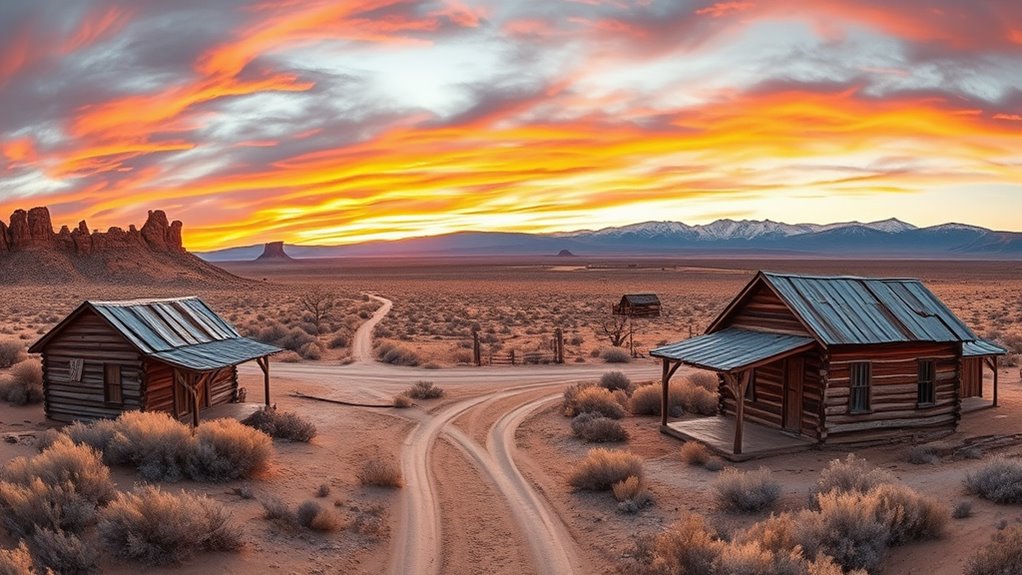

In Eastern Oregon, desert homesteads thrive by harnessing innovative irrigation techniques and setting up near natural water sources like creeks and springs. You’ll find settlers using methods like ditch and drip irrigation to turn arid land into productive farmland. Settlement patterns reflect smart choices, placing homesteads where water is accessible. Their resilience and adaptability transformed the tough landscape into a sustaining community. Discover more about how these pioneers overcame environment challenges to build their homes and farms.
Key Takeaways
- Homesteaders settled near reliable water sources like creeks and springs to sustain agriculture and daily life.
- Irrigation techniques, from simple ditches to advanced drip systems, enabled farming in arid conditions.
- Settlement patterns focused on accessing groundwater and natural water flows, shaping community locations.
- Innovators adapted by developing water management methods to convert dry land into productive farmland.
- Ongoing irrigation improvements help conserve water and support sustainable living in Eastern Oregon’s desert landscape.
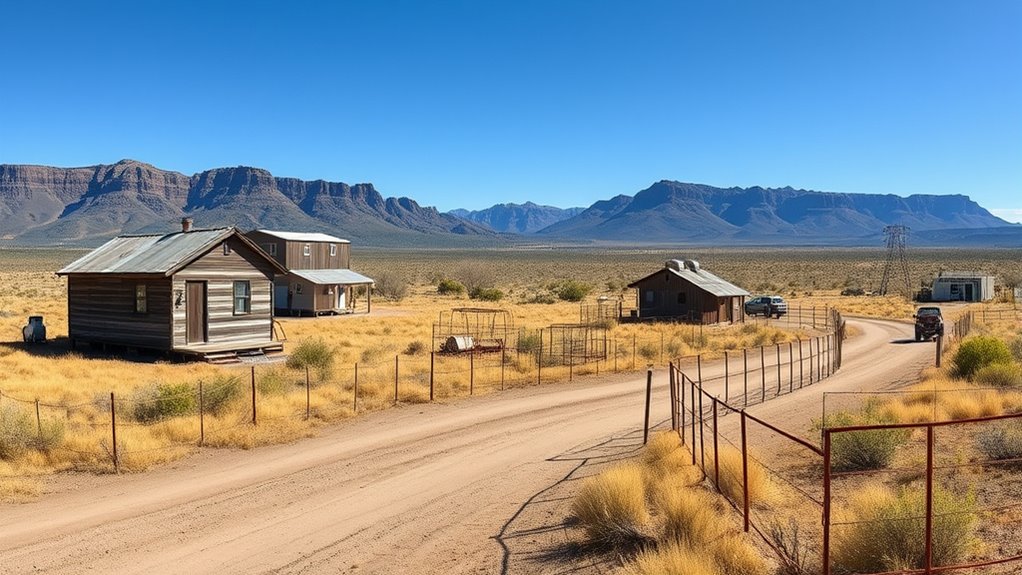
Have you ever wondered what life is like on a desert homestead in Eastern Oregon? Living in this arid landscape requires ingenuity and resilience. One of the key aspects that shape daily life here is the use of irrigation techniques. Since rainfall is scarce, you depend heavily on methods like ditch irrigation, where you channel water from nearby streams or rivers directly to your crops. You might also utilize more modern systems like drip irrigation, which delivers water directly to plant roots, conserving precious resources. These techniques are essential for growing crops and maintaining livestock, transforming dry land into productive farmland. Over time, settlers learned how to work with the land’s natural limitations, developing innovative ways to sustain themselves. This adaptability is deeply rooted in the historical settlement patterns of the region. Early pioneers often settled along waterways or in valleys where groundwater was more accessible, establishing small communities that thrived despite the harsh environment. These patterns of settlement weren’t random; they reflected an understanding of the land’s seasonal flows and natural water sources. Many homesteads are situated near creeks or springs, allowing settlers to establish reliable water supplies *crucial* for irrigation and daily living. As you explore the region, you’ll notice that the layout of farms and homesteads reveals a history of strategic positioning, designed to maximize water access and minimize the effort needed to irrigate crops. Over the decades, these settlement patterns influenced land use, with homesteaders carving out small plots amid the rugged terrain, often adapting or expanding irrigation systems to suit their needs. This history of settlement isn’t just about survival; it’s about turning a challenging environment into a home. You can see how early settlers prioritized areas with natural water sources, which allowed them to grow crops and raise livestock successfully. The evolution of irrigation techniques over time reflects this ongoing effort to optimize water use, from simple ditches to sophisticated systems that help conserve water during droughts. These practices have become a *crucial* part of life on the desert homestead, shaping the landscape and community structure. Understanding the historical settlement patterns gives you insight into how people have historically adapted to and thrived in this environment. It’s a story of resilience, innovation, and respect for the land’s natural rhythms. Recognizing the importance of irrigation techniques is fundamental to appreciating how settlers managed to cultivate the land in such a challenging climate. Whether you’re interested in the history or the current practices, it’s clear that irrigation techniques and settlement strategies are *crucial* to making a desert homestead sustainable in Eastern Oregon’s tough climate.

CARPATHEN Drip Irrigation System Kit – Complete Premium Garden Watering System with Adjustable Sprinkler Emitters, 5/16" & 1/4" Tubing and Fittings – Drip Line for Raised Beds, Lawn, Pots, Greenhouse
- Complete Drip Irrigation Kit: Includes emitters, tubing, fittings, and guides
- Easy Installation: Connects from water source to garden with ease
- Adjustable Spray Emitters: Customize watering for different plants
As an affiliate, we earn on qualifying purchases.
As an affiliate, we earn on qualifying purchases.
Frequently Asked Questions
What Are the Legal Requirements for Homesteading in Eastern Oregon?
To homestead in eastern Oregon, you need to meet specific legal requirements. First, you must file a claim with the Bureau of Land Management and establish residence and improvements on the land. Be aware of water rights, as they’re essential for farming or livestock. Additionally, check local zoning regulations to make certain your intended use complies with land use restrictions. Staying informed and following these steps helps you legally establish your homestead.
How Do I Find Available Desert Homesteads in the Region?
To find available desert homesteads in Eastern Oregon, start by researching land auctions and homesteading grants online. Check government websites like the Bureau of Land Management for upcoming auctions and application details. Attend land auctions in person or online, and use tips like reviewing auction catalogs carefully and understanding bidding procedures. Connecting with local real estate agents specializing in rural properties can also help you discover available homesteads.
What Is the Climate Like Year-Round in Eastern Oregon Deserts?
Imagine a climate that’s warm and inviting, yet offers surprises throughout the year. In eastern Oregon deserts, you’ll experience hot, dry summers perfect for desert flora and wildlife adaptation, with temperatures soaring into the triple digits. Winters are mild and cooler, rarely freezing, creating a gentle shift. Spring and fall bring pleasant breezes, making outdoor adventures enjoyable. Overall, the climate encourages resilience, supporting unique ecosystems in this beautiful, varied landscape.
Are There Any Specific Permits Needed for Building Homes?
Yes, you’ll need specific permits to build homes in eastern Oregon deserts. You must check zoning restrictions for your property to guarantee your plans comply with local regulations. Additionally, you’ll need environmental permits, especially if your construction affects protected land or water resources. Contact local planning offices early to understand all requirements, as permits can take time to process. Being proactive helps you avoid delays and ensures your project meets all legal standards.
What Resources Are Available for New Homesteaders in the Area?
You’ll find fantastic resources to start your homesteading journey, including local land records and agricultural assistance programs. To thrive, focus on water access solutions like wells or rainwater harvesting, and assess soil quality for farming or gardening. Community centers often offer workshops and support networks, helping you navigate permits and land management. These tools and tips empower you to confidently develop your homestead in this unique desert environment.
Conclusion
As you leave these desert homesteads, remember they stand like quiet sentinels guarding stories of resilience. The arid landscape, with its rugged beauty, symbolizes your own strength to thrive amid challenges. Just as the sun casts its steady light over the land, your spirit can shine brightly through adversity. These homesteads aren’t just places—they’re symbols of hope, perseverance, and the promise that even in the harshest environments, life finds a way to flourish.