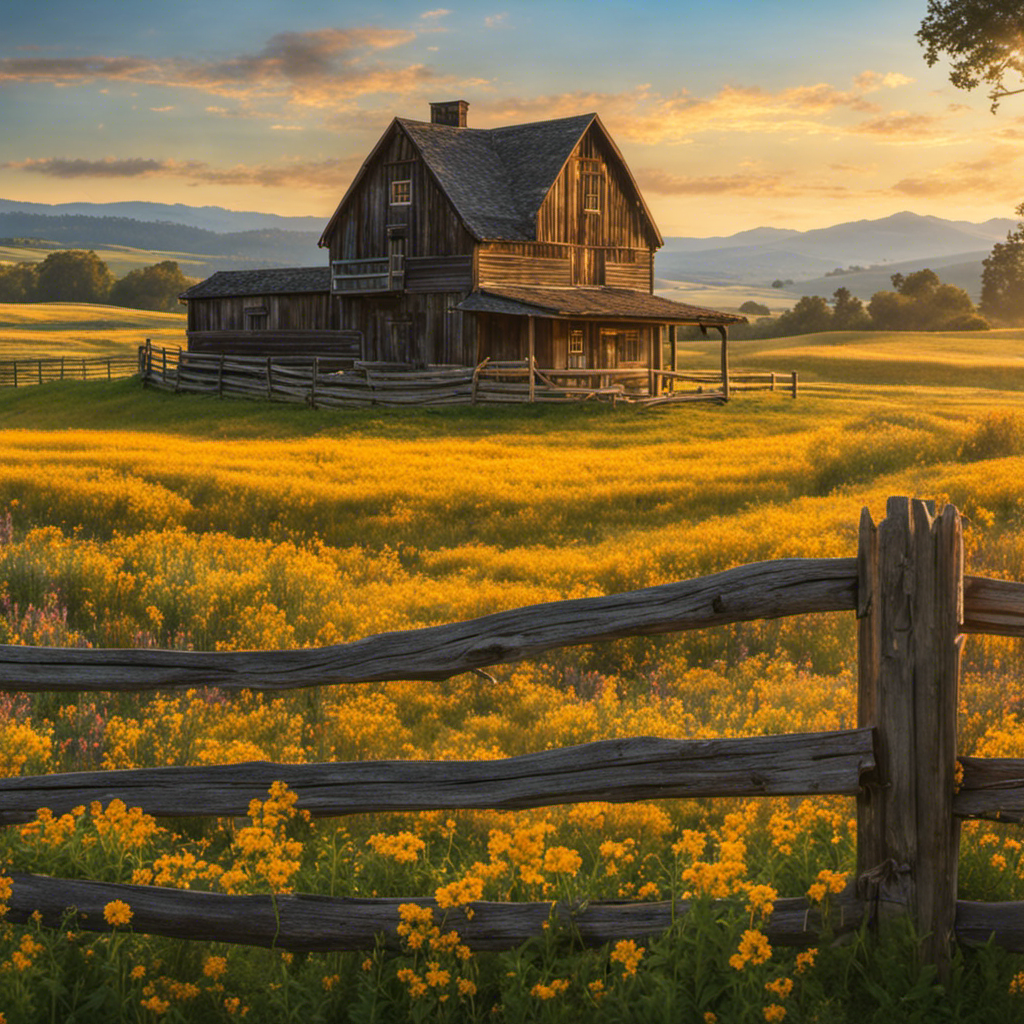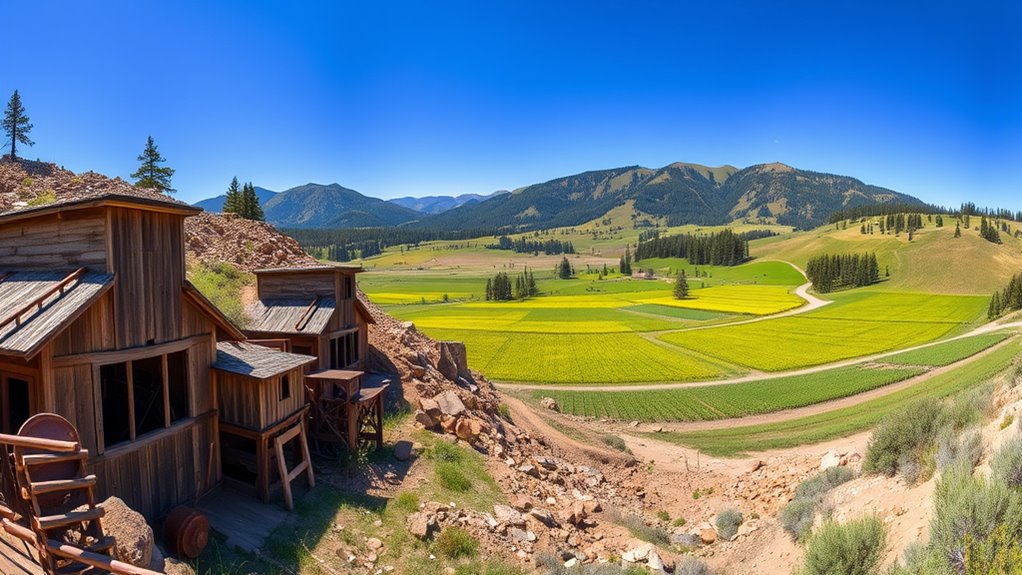

In Colorado’s high country, the shift from mining to farming has transformed the landscape and communities. After prosperous mining periods, many abandoned sites caused environmental issues like deforestation and water pollution. Today, sustainable agriculture and land restoration efforts focus on protecting ecosystems, water conservation, and eco-friendly farming. This change reflects Colorado’s resilience and ongoing balance between economic growth and environmental preservation. Keep exploring to see how these changes continue shaping the region’s future.
Key Takeaways
- The high country shifted from mining prosperity to sustainable agriculture and land restoration efforts.
- Abandoned mines and deforestation left lasting environmental impacts, prompting ecosystem recovery initiatives.
- Farming emerged as a stable, eco-friendly industry supporting local communities and tourism.
- Land use policies now emphasize balancing economic growth with ecological preservation.
- Growth in renewable energy and eco-farms reflects Colorado’s adaptation to post-mining land utilization.

Colorado’s history is a fascinating journey from rich mineral deposits to fertile farmland. As you explore this transformation, you’ll notice how the shift from mining to farming has shaped both the landscape and the local communities. This economic transition didn’t happen overnight; it was driven by changing priorities and environmental concerns. Mining brought prosperity to Colorado in the 19th and early 20th centuries, but it also left a lasting environmental impact. Abandoned mines, deforested areas, and polluted water sources serve as reminders of those intense extraction years. Recognizing these issues, communities and policymakers began seeking more sustainable ways to utilize the land, leading to a gradual move toward agriculture and conservation.
Colorado’s shift from mining to farming shaped its landscape and communities, driven by environmental concerns and sustainability efforts.
You might wonder how this change affects the environment today. The environmental impact of historic mining prompted efforts to restore ecosystems, clean up contaminated sites, and implement stricter regulations. These measures aim to reduce pollution, protect water sources, and prevent further ecological damage. As farming took root, it brought a different set of environmental considerations. Sustainable agriculture practices became essential to maintaining soil health, conserving water, and promoting biodiversity. The shift has helped Colorado address some of its ecological challenges, balancing economic needs with environmental stewardship. Additionally, advancements in environmental remediation methods have played a significant role in restoring affected areas and supporting sustainable land use.
The economic transition from mining to farming also reshaped Colorado’s communities. During the mining boom, towns grew rapidly, driven by the promise of wealth. Once the mines closed or declined, those communities faced economic hardships. Farming offered a more stable and sustainable livelihood, gradually revitalizing rural areas. You’ll find that agriculture now plays a crucial role in Colorado’s economy, supporting local markets and tourism. This shift not only provided economic stability but also fostered a sense of resilience among residents who adapted to new industries.
Today, Colorado continues to navigate the delicate balance between economic growth and environmental preservation. The legacy of mining still influences land use policies, but farming and conservation efforts are gaining momentum. You can see this in the development of eco-friendly farms, renewable energy projects, and land restoration initiatives. The transition reflects a broader understanding that economic prosperity doesn’t have to come at the expense of the environment. Instead, Colorado demonstrates that through mindful planning and sustainable practices, it’s possible to honor its past while building a more resilient future.
In essence, the shift from Colorado’s mining past to its farming present is a testament to adaptability. You witness a state that recognizes the importance of protecting its natural resources while fostering economic growth. This ongoing journey highlights how environmental impact has driven change, guiding Colorado toward a more sustainable and prosperous future.

Pvirbravoo Sapling Puller Tool – Heavy Duty Tree Root Puller for ¼ to 2" Woody Stems | Fully Uproots Trees & Shrubs | Ergonomic Garden Tool for Landscaping, Farming, Forestry
Fully Uproots Woody Stems – The Tree Puller Tool Efficiently Uproots Trees, Shrubs, Vines, And Thorns With Large…
As an affiliate, we earn on qualifying purchases.
As an affiliate, we earn on qualifying purchases.
Frequently Asked Questions
How Has Climate Change Affected High Country Agriculture?
Climate change has markedly impacted high country agriculture by increasing glacial melt, which disrupts water supplies essential for farming. You might notice more frequent droughts, making it harder to grow crops and raising concerns about drought resilience. As temperatures rise, you need to adapt your practices, conserve water, and find ways to maintain productivity despite these changing conditions. These shifts challenge your ability to sustain farming in the high country.
What Are the Main Environmental Impacts of Historical Mining in Colorado?
You should know that historical mining in Colorado caused significant environmental impacts. Toxic tailings from mining sites leached harmful chemicals into soil and water, contaminating ecosystems. You’ll also see habitat disruption, as mining activities cleared land and disturbed wildlife habitats. These effects persist today, posing risks to local ecosystems and communities. Addressing these issues requires ongoing cleanup efforts and stricter regulations to minimize further environmental damage.
How Do Local Communities Adapt to Shifting Economic Focuses?
You adapt by fostering community resilience and embracing economic diversification. As industries shift, you support local businesses, develop new skills, and seek opportunities in emerging sectors like agriculture or tourism. Collaborating with neighbors and local leaders helps you navigate change, ensuring your community remains vibrant and sustainable. By staying flexible and open-minded, you turn challenges into opportunities, securing a stronger, more resilient future despite economic shifts.
What New Farming Techniques Are Emerging in High-Altitude Areas?
Did you know that high-altitude farms now use innovative techniques like hydroponic farming and drone agriculture? These methods help you grow crops efficiently despite rocky terrain and short growing seasons. Hydroponic systems allow you to cultivate plants without soil, while drones monitor fields from above, optimizing resource use. Together, these emerging techniques enable you to farm sustainably and successfully in challenging high-altitude environments.
Are There Any Legal or Policy Changes Supporting the Transition?
Yes, policy incentives and land use regulations now support your progression from mining to farming. Local governments offer tax breaks and grants to encourage sustainable agriculture, while land use policies are relaxed to allow more farming activities in high-altitude areas. These changes make it easier for you to adopt new farming techniques, ensuring your shift is both feasible and beneficial, aligning economic growth with environmental conservation efforts.

The Andersons HumiChar Organic Soil Amendment with Humic Acid and Biochar Covers 12,000 sq ft (12 lb)
Improves soil health, lawn health, plant health, and reduce the use of fertilizers
As an affiliate, we earn on qualifying purchases.
As an affiliate, we earn on qualifying purchases.
Conclusion
As you see, Colorado’s shift from mining to farming is transforming its landscape and economy. Did you know that over 70% of the state’s land is now dedicated to agriculture? This change isn’t just about new industries; it’s about preserving the high country’s beauty and resources. As you explore Colorado, remember how this remarkable evolution shapes both its past and future, proving that adaptability can lead to thriving communities amid changing times.

Starrey Drip Irrigation System, 2026-Upgrade 100Ft 1/4" Garden Watering System with 24 Pcs 360° Adjustable Copper Nozzles, DIY Kit for Garden, Lawn, Greenhouse, Raised Beds & Outdoor Plants
Everything in One Box – Everything included: 100FT 1/4" tubing, 24 nozzles, connectors, stakes, ties & end caps….
As an affiliate, we earn on qualifying purchases.
As an affiliate, we earn on qualifying purchases.

8kW Solar Generator & 400W Wind Turbine Hybrid Power System – Complete Off-Grid Renewable Energy Kit for Farm & Remote Use, 220V Output, Eco-Friendly Solution
Experience reliable energy with our 8kW Solar Generator and 400W Wind Turbine combo. This renewable energy solution provides…
As an affiliate, we earn on qualifying purchases.
As an affiliate, we earn on qualifying purchases.